Driver Training

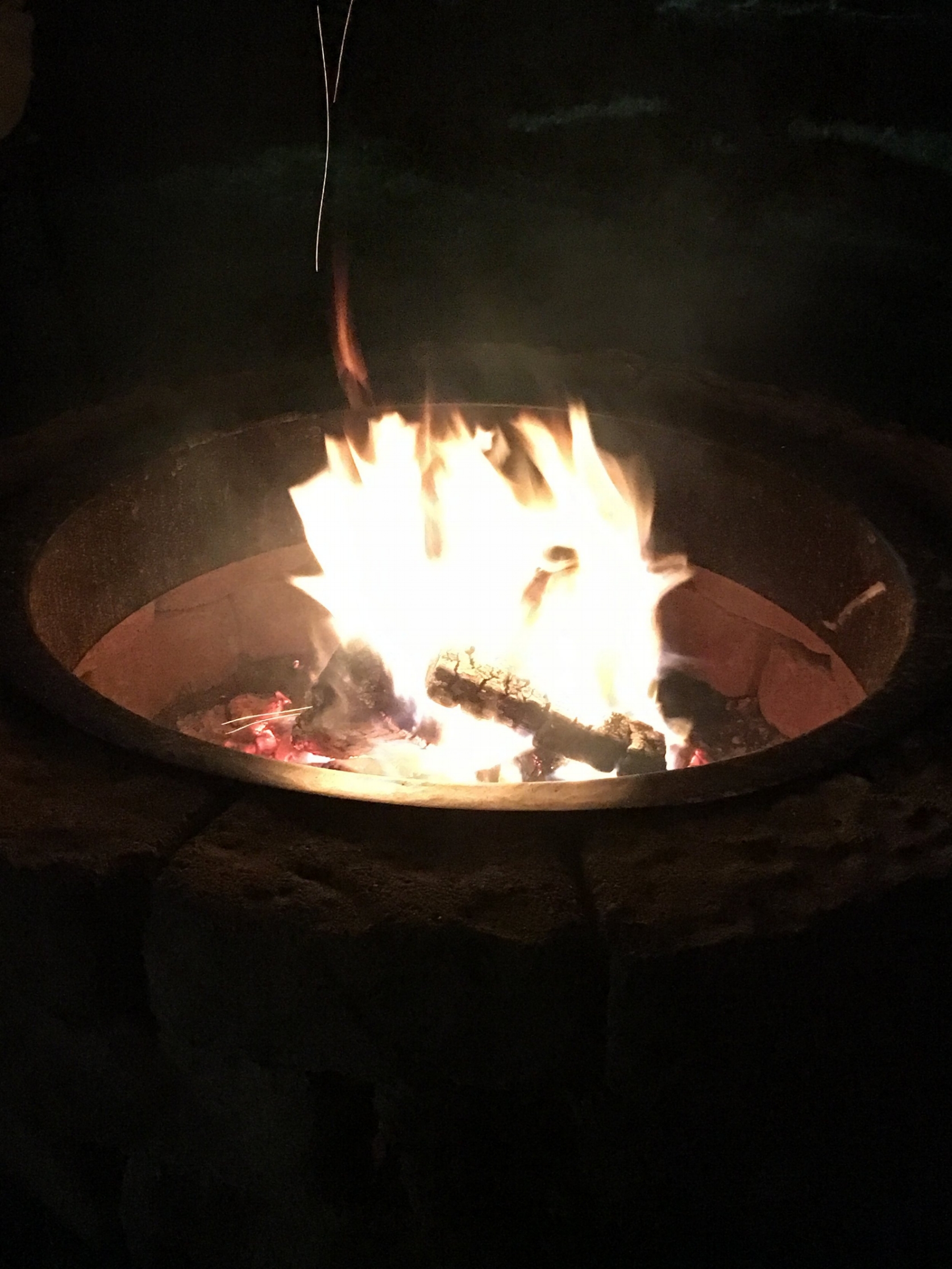
Driver training is more than getting comfortable behind the wheel of the apparatus you're training on. This is the perfect time to go over apparatus placement in your frequent flyer locations and also your problem buildings (strip malls, apartment complexes, houses pushed back off the road, etc.). Getting practice at apparatus placement during training is helpful for when the call comes in - big or small. Remember placement is key for efficient fire attack and primary search. 

This also helps the chuefer become more accustomed of the streets in your primary response area, more identifiable of hydrant locations for easier access to them, along with your crew putting together initial preplans for the structures. This can prove good kitchen table discussions on strategies and tactics. 

Next time your company officer wants to take you out driver training, pay attention to the buildings you come across, size them up and begin some good kitchen table discussions later at the firehouse. 

IMG_1082.JPG

Until next time; work hard, stay safe and live inspired. 

About the Author

NICHOLAS J. HIGGINS is a firefighter with 15 years in the service all within departments in Piscataway, NJ. Nick has held the ranks of Lieutenant and Captain as well as being a township elected District Fire Commissioner for 1 term (3 years) in Piscataway, NJ. He is also a NJ State certified level 2 fire instructor. He holds a B.S. in Accounting from Kean University working in Corporate Taxation and is the founder/contributor of the Firehouse Tribune website.

You're in the Wrong Spot

"Man, that truck sure looks familiar." On a bright, sunny day I had just walked out of an Arlington, VA building. The warm feeling of accomplishment was over me as I had just registering for a charity walk. My daughter, who was about 3 at the time, was bouncing along with me. But that truck. The same grey color. The same kind of wheels. Wait. Is that the same license plate? And why is it on the back of a tow truck?  I had disobeyed a fundamental rule for living in the Washington DC area: There is no such thing as a 'free' parking space. After frantic negations with the driver, I was able to broker a deal to get my truck back on the spot.  
 
I arrived at my second stop of the day, feeling pretty good about not having to walk there. This time we are at a cookout in a park in DC. I park on the side of the road, and cross the street to the cookout. About an hour into my time there, I now see the red and blue lights of the police parked behind the cars near where I had parked. He's out, asking questions, and looking at license plates. Seriously? Twice in one day I'm parked in the wrong spot?  Lucky, this time it was just a request to move somewhere else. Easy fix. 
 
Finally, I made it home to a parking spot that was reserved for me. I knew where I was supposed to be. No tow trucks coming for me. No police officers telling me to move. Nice and safe. I had made it to the right spot. Have you spent some time in your life looking for your right spot? Many times we have periods in life that we feel like we are going place to place and not belonging there. Whether it be a major conflict of priorities, or just the wrong place at the wrong time, we will always find there are places we don’t quite fit. What do you do? Much like my parking lot adventure, put yourself in gear and drive to the next place. Not fitting in at one spot, doesn't mean you can't fit in somewhere else. Everyone has a spot reserved just for them. 

About the Author

NICK BASKERVILLE has had the honor of serving in the United States Air Force for 10 years, followed by 4 years in the United States Air Force Reserves. He attained the rank of Technical Sergeant (E-6). Nick also has 16 years of fire service time, with 13 years of that being in a career department in Northern Virginia. Nick has had the opportunity to hold positions in the Company Officer's section of the Virginia Fire Chief's Association (VFCA), The Virginia Fire Officer's Academy (VFOA) staff, and in the International Association of Black Professional Fire Fighters (IABPFF) as a chapter president, a Health and Wellness committee member, and one of the IABPFF representatives to the Fire Service Occupational Cancer Alliance.


When Help Asks for You

One day, I'm riding in the back of the fire engine, because, when you are in the fire department, that's what you do. Then a guy looks at me and says "so, what are you good at?" "Nothing, really" "Come on, everybody's good at something! That guy, was Marcello Trejo. He was good at plenty of things: Fitness. Compassion. Keeping people laughing. He was the kind of person that when he came to mind, I would wonder what kind of extraordinary impact he would have on the entire fire service. He was not the guy I would have thought would have taken his own life. TD Jakes talks in one of his sermons that some people can be going through turmoil and no one ever know it. Are you one of those folks with turmoil hidden behind a smile? Would you know what to do if someone you knew was that person?

When I take a flight, the flight attendant always has in his or her safety briefing that when we lose cabin pressure, first put your mask, then help the person next to you. In the military and in public safety, we rarely do that. Instead, we fail to see how taking care of ourselves, can be the best things we can do to help others. Instead, like a superhero from the 50's or 60's, we set out to save the world on our own. Not realizing that superheroes of today need, and get, help from ordinary people who care about them. 

For the month of Sep, I've decided that every day, I'll do 22 pushups for the military suicides that happen every day. Then another 13 Burpees to represent initiative 13, the Behavioral Health Initiative from the 16 Firefighter Life Safety Initiatives. I started to video the workouts, but then I thought "I'm no star athlete, what's the point in that?" Instead, every day, I'm going post something I learn about mental health or suicide. A story. A fact. Info about an organization. Sometimes it will be a video, sometimes just an encouraging word.

The challenge I have for you, not to do push-ups. Go learn something new about mental health or suicide, and post on my blog at www.helpasks4u.wordpress.com  Whether the help is for you personally, or if the help is for someone you care about, remember this:

"Ask for Help, because help always asks for you." Marcello Trejo

About the Author

NICK BASKERVILLE has had the honor of serving in the United States Air Force for 10 years, followed by 4 years in the United States Air Force Reserves. He attained the rank of Technical Sergeant (E-6). Nick also has 16 years of fire service time, with 13 years of that being in a career department in Northern Virginia. Nick has had the opportunity to hold positions in the Company Officer's section of the Virginia Fire Chief's Association (VFCA), The Virginia Fire Officer's Academy (VFOA) staff, and in the International Association of Black Professional Fire Fighters (IABPFF) as a chapter president, a Health and Wellness committee member, and one of the IABPFF representatives to the Fire Service Occupational Cancer Alliance.


Window Bars & the Set of Irons

Mostly found in urban areas but not uncommon in suburban or rural areas are window bars. These bars are common to private dwellings and often found on basement and first floor windows for security reasons.  

These bars present a multitude of problems for firefighters responding to calls at these locations. 

1. Delay in access to inside the structure.

2. Difficult to perform VEIS (Vent. Enter. Isolate. Search) 

3. Reduces means of egress for firefighters and victim removal should a window need to be used. 

Window bars have the tendency to turn room and content fires into multiple alarm fires and have created havoc for access to victims or down firefighters for reasons mentioned above; so for that reason lets discuss how to remove them quickly and efficiently using the set of irons. 

On type 3 brick buildings the bars are held in by expandable anchors. Holes are first drilled into the brick and the anchors are used to hold the bars in place around the window.

For wood frame structures (type 5) lag screws are usually used to hold the bars in place. 

For either structure, use the set of irons (axe & halligan) and destroy the screws and anchors holding the bars in place by forcing them with the adz end of the halligan driving the halligan with the butt (non blade side) of the axe. 

Should the fastening points be unattainable, split the frame using the halligan and pry the gate from the opening using the fork side of the halligan. 

If the bars are set into the brick, mortar or concrete use a sledge or any type of mauling tool and smash the area encasing the bars into the wall and pry the bars away from the window. Should it be out of reach, hooks are another tool we can use for prying away as well.

Don't let obstacles get in the way of protecting life and property. This was a couple ways we can gain entry to a building should we only have hand tools available to us. Relying heavily on gas and hydraulic tools can be costly and some times cause more damage than it's worth. The more efficient we are using hand tools the quicker we can get to work and get the job done. 

image.jpg

Until next time; work hard, stay safe and live inspired. 

About the Author

NICHOLAS J. HIGGINS is a firefighter with 15 years in the service all within departments in Piscataway, NJ. Nick has held the ranks of Lieutenant and Captain as well as being a township elected District Fire Commissioner for 1 term (3 years) in Piscataway, NJ. He is also a NJ State certified level 2 fire instructor. He holds a B.S. in Accounting from Kean University working in Corporate Taxation and is the founder/contributor of the Firehouse Tribune website.

Swimming Lesson

You would think that I would know what to expect by now. Four summers in a row, I have taken my kid to swim lessons. The last two summers, I've avoided being the parent who is too involved in his child’s class. Actually, the instructors don't let any parents in during practice, so I had to find something to do while I wait. I have an ordinary routine: 

o    Drop off the kid to her lessons
o    Swim some laps
o    Sit in the whirlpool
o    Shower
o    Pick up the kid

Last week something different happened before swimming. I got an email from the personnel section in my fire department about the next promotional announcement. Just like that, my ordinary swim routine turned into an answer for this question:  How do you to take on your next challenge in life?

•    Get in the water 

o    After checking the water temp with my big toe before swimming, the cold water did not excite me
o    Committing to doing the preparation for a promotional exam made me shiver at the thought of the work that needed to be done
o    Getting motivated to start a challenge can be trying

•    It will warm up…eventually 

o    After forcing my body not to jump out the water, it acclimated
o    It took me some time to get used to the ideal of beginning my prep for a new challenge
o    Once I did, I got comfortable with the taking new action

•    One stoke at a time

o    I didn't start out swimming a lot of laps; I started out being consistent with small movements
o    I am studying little by little. Day by day. Week by week. Until I reach my goal.  One stroke at a time. One lap at a time.
o    Big success comes from small steps. 

Every day, ordinary people, like you and I, do ordinary things. If we pay attention, we may find extraordinary inspiration to take on new challenges. 

About the Author

NICK BASKERVILLE has had the honor of serving in the United States Air Force for 10 years, followed by 4 years in the United States Air Force Reserves. He attained the rank of Technical Sergeant (E-6). Nick also has 16 years of fire service time, with 13 years of that being in a career department in Northern Virginia. Nick has had the opportunity to hold positions in the Company Officer's section of the Virginia Fire Chief's Association (VFCA), The Virginia Fire Officer's Academy (VFOA) staff, and in the International Association of Black Professional Fire Fighters (IABPFF) as a chapter president, a Health and Wellness committee member, and one of the IABPFF representatives to the Fire Service Occupational Cancer Alliance.

A Moment In Time: Remembering Hinal Patel

To quote one of my all-time favorite musicals, RENT, "525,600 minutes - how do you measure, measure a year?" It is absolutely mind blowing that it has been a year since we lost Hinal. 12 months of laughs, 52 weeks of friendship, 365 days of moments, 525,600 minutes of love.

It is still all very surreal to me and I think this is how life is for most of us now. Over the last year we have all experienced highs and lows, good and bad, failures and triumphs, and countless moments that we have shared and countless moments we have kept to ourselves. One thing that is absolutely evident is that we have all missed sharing this crazy ride we call life with Hinal. Even as I sit here and write this I can think of 1,000 different things that I wish I could have shared with her or wish she was a part of this past year. 

As life goes on, we often let little things drift out of our minds. We often take things for granted and that is when we start to miss the little moments in each day. Little moments like just seeing Hinal smile, seeing how passionate she was about the work she did, how a room would light up when she walked in, or her beautiful personality. 

Not a single day has gone by where I haven’t thought of Hinal. Through every single moment, memory, experience and adventure I knew that Hinal was still with us. Her spirit lives on in every single person who was fortunate enough to cross paths with her. The world and our lives are definitely dimmer with her gone; however, the passion she had for life should fuel us all to grow and be the absolute best we can be. 

For every moment we experience I know that she is here watching over us and sharing in our triumphs, standing by us in our failures, and laughing with us (or at us sometimes) every step of the way. 

To answer the question of how do you measure a year, it’s not where you have been, not what has happened, not holidays, birthdays, parties or even in time. The answer is simple: LOVE. Do not let one single moment go by without acknowledging its importance. Do not let one single person who means anything to you go without telling them how you feel because anything can happen. The only time guaranteed is right now so make it count.

To Hinal: I am still in complete disbelief. I look at your pictures and get emotional and then I think of the good times and how I never could resist your beautiful smile. I love you, I miss you, please continue to watch over me as I know you have done for the past year.

Love you forever and always,

Sean

 Photo collage showing some memories of Hinal. Notice her beautiful smile in every one of her pictures.

The vehicle stickers that were designed and printed for members of the North Stelton Volunteer Fire Company, where Hinal was a dedicated member, and family.

The vehicle stickers that were designed and printed for members of the North Stelton Volunteer Fire Company, where Hinal was a dedicated member, and family.

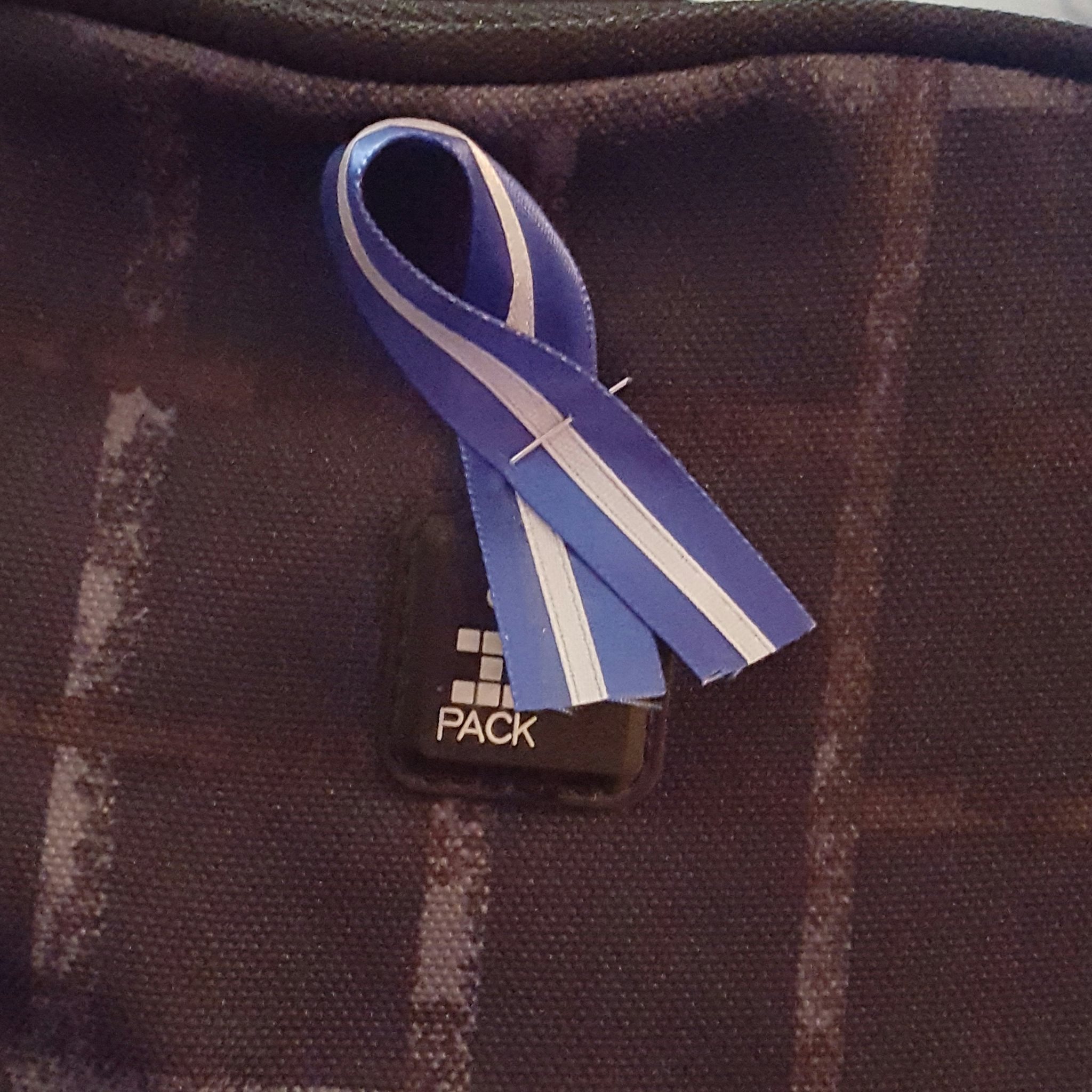
A Thin White Line ribbon that I have pinned to my backpack, my lunch box, my work ID, and hanging in my car to always keep Hinal with me and to always keep her spirit and memory alive.

A Thin White Line ribbon that I have pinned to my backpack, my lunch box, my work ID, and hanging in my car to always keep Hinal with me and to always keep her spirit and memory alive.

Bulkhead Doors

image.jpg

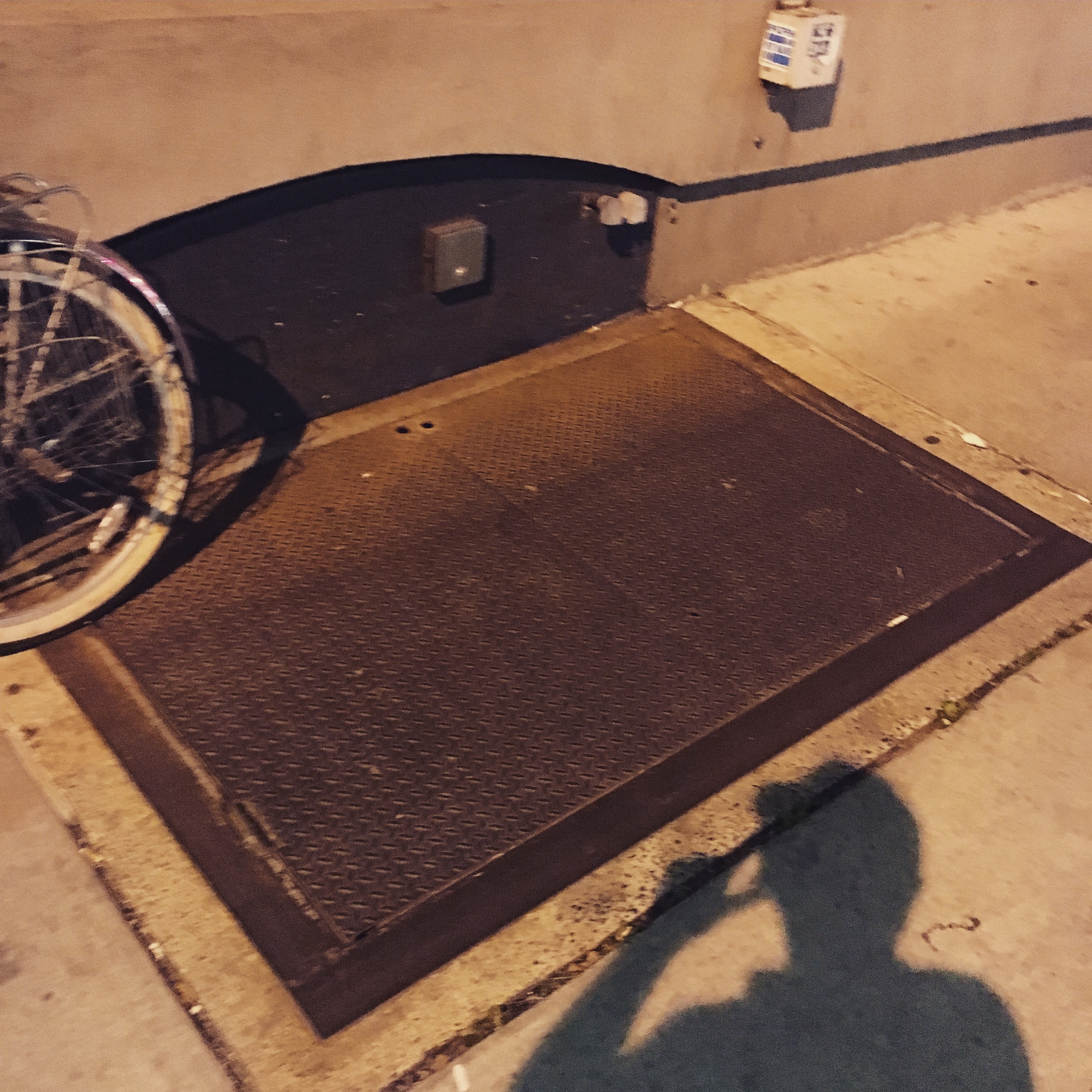
Some stairs in a bulkhead doors are sloped greater than normal sloped stairways thus causing increasing issues for crews to make entry due to its steeper incline should entry be warranted through such doors. On the other hand, these doors make great use for ventilation sources for below grade fires due to its easier and for the most part safer access when fighting below grade fires. They can be found in both resident and commercial structures.

Until next time; work hard, stay safe and live inspired. 

About the Author

NICHOLAS J. HIGGINS is a firefighter with 15 years in the service all within departments in Piscataway, NJ. Nick has held the ranks of Lieutenant and Captain as well as being a township elected District Fire Commissioner for 1 term (3 years) in Piscataway, NJ. He is also a NJ State certified level 2 fire instructor. He holds a B.S. in Accounting from Kean University working in Corporate Taxation and is the founder/contributor of the Firehouse Tribune website.

The Taciboard

When you're a fire service instructor doing a practical exam, you see all kinds of peculiar things. For instance, two students walk to my hazmat skill station. They have all their gear on. They are carrying their tools. But wait. What is that? I've been in the fire service 16 years and have never seen a tool like this. Picture this: A red, wooden, board. It's flat and is about as long as a typical ax or pro bar. One side had a handle carved into. The other side, metal reinforcement attached with screws. Have you ever seen someone coming towards you and said to yourself, "Here comes the funny story!" I waited patiently to hear the "what had happened" start for this odd invention.
 
"It's the Taciboard!"  "The what!?" I say. The student (we'll call him Fred D. Firefighter) goes on to explain that early on in recruit class, he left his tool behind during training. To assist Fred in remembering the importance of carrying his tool, the instructors gave him a board to carry everywhere. It was simply a plank of a dingy, wooden pallet. Fred took it upon himself to do more with it. That's when he came up with this unique, versatile tool. He listed more uses for this thing than I can recite. 
 
When's the last time you owned a mistake you've made? When is the last time you've seen the opportunity in your challenge?  Most people would have seen carrying this board as just an ordinary recruit school punishment. Instead, Fred made an extraordinary new tool based on a new challenge. You don't have to be a teacher to provide a worthwhile lesson. In this case, here's Fred’s lesson for us: Life's challenges give you a chance to find opportunity. Ordinary people do extraordinary things. 

About the Author

NICK BASKERVILLE has had the honor of serving in the United States Air Force for 10 years, followed by 4 years in the United States Air Force Reserves. He attained the rank of Technical Sergeant (E-6). Nick also has 16 years of fire service time, with 13 years of that being in a career department in Northern Virginia. Nick has had the opportunity to hold positions in the Company Officer's section of the Virginia Fire Chief's Association (VFCA), The Virginia Fire Officer's Academy (VFOA) staff, and in the International Association of Black Professional Fire Fighters (IABPFF) as a chapter president, a Health and Wellness committee member, and one of the IABPFF representatives to the Fire Service Occupational Cancer Alliance.

Fire Fact #2: The 2 1/2" Line: A Mainstay of the American Fire Service

The 2 ½” hose line has been in the fire service for decades. This is especially true for urban fire departments with big fires (large factories, high-rise office buildings and crowded residential neighborhoods) and abundance of manpower. Although some departments had retired the use of the 2 ½” the New York City Fire Department required it for all structural firefighting up until the late 1960s. During the 1960s and 1970s the country was hit with a financial crisis leading departments to abandon the use and also questioned the usefulness of the hose and began downsizing to small hose lines for heavy fire attack. 
Well as we all know the 2 ½” hose line is still alive and kicking today; so let’s learning more about the hose line. Using a 2 ½” Attack Line may be a daunting task and very difficult to maneuver throughout a structure.

Here are some benefits of using a 2 ½” line:
1.    Lower friction loss
2.    High fire flows
3.    Exceptional reach & penetration
4.    Heavy knockdown power

When to use:
1.    Heavy fire conditions regardless of occupancy
2.    Offensive attack isn’t safe or able to be conducted
3.    Large un-compartmentalized structures
4.    Unable to determine location, size or extent of fire
5.    High-rise buildings
6.    Large brush or trash fires

Something to consider: 
50 feet of a charged 2 ½” line weighs 106lbs and 50 feet of a charged 1 ¾” weighs 52lbs. Take into account your manpower as well when deciding your initial attack line. 

Until next time; work hard, stay safe and live inspired. 

About the Author

NICHOLAS J. HIGGINS is a firefighter with 15 years in the service all within departments in Piscataway, NJ. Nick has held the ranks of Lieutenant and Captain as well as being a township elected District Fire Commissioner for 1 term (3 years) in Piscataway, NJ. He is also a NJ State certified level 2 fire instructor. He holds a B.S. in Accounting from Kean University working in Corporate Taxation and is the founder/contributor of the Firehouse Tribune website.
Where Are The Instructions?

Everything was gathered in front of us: Eggs. Water. Oil. Cooking spray. A pan. And of course, cake mix. My youngest daughter and I had items ready, as per the standard operation procedures of cupcake making in our home. We are set to begin operation 'ultimate cupcake'. What makes our cupcakes ‘ultimate’? People may not be willing to put 10 lbs of stuff into a 5 lbs bag, but I'm willing to put 24 servings of cupcake batter into a 12 serving pan.  
 
Aside for the last part, I'm pretty good at following instructions. After years in the military, followed by years in the fire service, I have had plenty of practice. Give me instructions to a task I have never done, and I'll probably figure it out. But what do you when there are no instructions? For things like, how to be a dad? Sure there are self-help books jumping off the shelves for parenting. Where is the one for your specific model of kid? 
 
Despite all of the specific instruction I 've had in my two careers, those careers have also helped me figure out how to work without instructions. I use the acronym RPM. (because, after 14 years in the military, and 16 years in the fire service, how could I resist making my own acronym).  I use this regularly for being a dad, but it can be applied to other aspects of life, such as leadership
 
1.    Read
o    No, you can't find all the answers you need in a book. Yes, you can find useful info that can help you. It is a starting point. Reading will not always give you answers, but it can give you ideals. Things change, parenting changes, leadership situations change. You better be changing to keep up. Keeping your reading list current will help with this.
 
2.    Playbook
o    Slide tray. Template. Script. Whatever you want to call it. People who have been in the military and/or fire service know how to take prior experience, and come up with a general-use guide for getting through situations. I say general, because sometimes the play is broken; it doesn't go as planned. But it can still be made to work. And now the play is improved.   
 
3.    Mentor
o    Get a counsel of wise people. In a TED talk video, Bruce Feiler, a dad dying of cancer, found a group of dads to mentor his kids after he passed on from his illness. We all need a group of people wiser than us to prepare us for what is ahead. Having one mentor is not enough. This group needs to be as diverse as you want your life to be. Take their wisdom. See the possibilities.  
 
There are a number of life areas that you will have to make things happen without directions on the box. Whenever you’re operating out of the box, try using RPM for ultimate leadership, or ultimate cupcakes. Life needs more of both.  

About the Author

NICK BASKERVILLE has had the honor of serving in the United States Air Force for 10 years, followed by 4 years in the United States Air Force Reserves. He attained the rank of Technical Sergeant (E-6). Nick also has 16 years of fire service time, with 13 years of that being in a career department in Northern Virginia. Nick has had the opportunity to hold positions in the Company Officer's section of the Virginia Fire Chief's Association (VFCA), The Virginia Fire Officer's Academy (VFOA) staff, and in the International Association of Black Professional Fire Fighters (IABPFF) as a chapter president, a Health and Wellness committee member, and one of the IABPFF representatives to the Fire Service Occupational Cancer Alliance.


Ordinary People

"You know; this is a bigger deal than you think." That's what I tell my wife as she gets ready for her second interview. For the second time in one day, I've been asked "Are you Veronica Baskerville's husband?" I’ve heard this question many times in our 12 years of marriage, but not from reporters.  

The evening before, my wife went from hearing the piercing sounds of laughter and joy at a baby shower, to the ringing in her ears of gun shots piercing the air. One of those shots landed in the shoulder of a 7-year-old kid. My wife rendered aid to the kid until public safety arrived on the scene to take over. So automatic was her response to give aide, it didn't register for her to even talk about it later that evening. Honestly, with each of us being in the public safety for 16 yrs. each, we each have forgotten most of these stories before getting home. It’s “Just another day at the office.”

On this first day of National EMS week (15-21 May), I'm reminded that of the many ways to group people in the world. I have found yet another paring. There are those people in public safety that have these ordinary days. On duty or not. Career or volunteer.  Full time, part-time, or per call. And will always answer the call to action.

And then there are the people not in public safety. People who see our ordinary day as extraordinary. And appreciate that someone is doing these ordinary things that have an extraordinary impact. I’ve had the privilege of seeing the embodiment of public service for 16 years in my wife. Despite her claims of being an ordinary person, I have always known her extraordinary impact.

About the Author

NICK BASKERVILLE has had the honor of serving in the United States Air Force for 10 years, followed by 4 years in the United States Air Force Reserves. He attained the rank of Technical Sergeant (E-6). Nick also has 16 years of fire service time, with 13 years of that being in a career department in Northern Virginia. Nick has had the opportunity to hold positions in the Company Officer's section of the Virginia Fire Chief's Association (VFCA), The Virginia Fire Officer's Academy (VFOA) staff, and in the International Association of Black Professional Fire Fighters (IABPFF) as a chapter president, a Health and Wellness committee member, and one of the IABPFF representatives to the Fire Service Occupational Cancer Alliance.

The Importance of Clean PPE

We all love that fresh smell of smoke on our gear. It lets others know we been in a fire and the charred up shield on our helmets tell our stories of the fires we been in. The soot filled turnout gear and sometimes all over our hands and face; the smokey smell in our hair for days, all of that comes with territory of fighting fire. It’s great isn’t it? It’s almost like a rite of passage into the service.  

But is it something that’s costing us years of our time in the service and almost shortening our days with our families?

While on the job, we as firefighters come in contact with tons of carcinogens, toxins and diseases found in structure fires, car fires, as well as blood and bodily fluids which can be carried away in our turnout gear causing potential harm through ingestion, inhalation and/or absorption. As members of the emergency services, we are continually trained on those three routes of entry when refreshing ourselves on our yearly blood borne pathogens training each year. Firefighters are not the only ones to be at risk for contracting potential hazards that are left on our uncleaned gear. Anyone who has direct contact with the gear is also at risk.  This goes for the general public as well since we all know children love getting tours of our firehouses, seeing our apparatus and trying to fit into our gear and wear our helmets. By not keeping our gear clean, exposures to others are possible since we are also in direct contact with the general public. 

Turnout gear that has been worn on fire-related calls, and has been in contact with carcinogens without cleaning in between calls will diminish the gears ability to protect the firefighter. The soot and other related products of burning leave a number of material deposits on the surface of gear and in the fibers of the protective layers of the gears causing the surface of the gear to be less heat reflective. In the presence of oils and other flammable materials, the heat absorption on the surface of our gear, should this gear not have been cleaned prior to making contact, could potentially lead to re-ignition or flash over. When considering the less obvious type of soot - carbon based soot – increases conductivity when in contact with live wires, raising potential for electrical shock. 

Long term effects of dirty gear is quite simple, it doesn’t last as long as the manufacturers recommendation. The soot and other particles that were continually absorbed into the gear will begin to break down the shell of our gear and some of those particles and burn bits that are lodged in our gear can become abrasive causing rips and tears in our gear. Regular human movements and the bending and folding of the gear will cause the rips and tears in the gear abs wear out the fibers. Recommended cleaning of the shell of the gear is ever six months at minimum or more depending on how much contact we have with soot and other carcinogens to reduce the amount of abrasive particles picked up in our gear. So remember to wash your gear; keep yourself, your crew, your family and the general public safe. Just like we take pride in keeping our apparatus, our station and our tools clean, we should our turnout gear because it’s another tool to keep us safe. So take pride in looking your best on every run because we are always in the public eye!

Until next time; work hard, stay safe and live inspired. 

About the Author

NICHOLAS J. HIGGINS is a firefighter with 14 years of service all within departments in Piscataway, NJ. Nick has held the ranks of Lieutenant and Captain as well as being a township elected District Fire Commissioner for 1 term (3 years) in Piscataway, NJ. He is also a NJ State certified level 2 fire instructor. He holds a B.S. in Accounting from Kean University working in Corporate Taxation and is the founder/contributor of the Firehouse Tribune website.
 

Get Me Down From Here

There is no way I am doing that! That was my initial thought. I was in high school living in the European country of Belgium when we went to a dimly lit roller skating rink. I was there with a group of friends and parents. Skating rinks were nothing new, but this one had something different. This mountain of a ramp. At least one story high. You could slingshot down it and out onto the main floor. Why on earth would I do that? Apparently, my brain did not convey that thought down to the rest of my body in time to stop me from getting up there. I found myself at the top of ‘skate mountain’, looking down. There was no way to go back if I wanted to. My mom looked on, probably with hopes that she spoke enough French to get me to a hospital in case this didn't work out as planned. 
 
Years later, I'm at it again. I shouldn't be surprised. This time it was a hot, summer day at a busy pool in Germany. I'm standing on the diving board a few stories high. The smell of chlorine in the water makes it all the way up to me. I was excited about jumping off...until I got to the top. Have you ever been really excited about jumping into something new, only to find yourself not sure if excitement or fear is what you're feeling? Suddenly, out of nowhere, a kid half my age bumps me out of the way as he makes his jump. Ready or not, I'm about to go over. 
 
Yet again, I managed to find myself in an elevated place. This time, it's walking onto an empty stage. It's the Howard Theater in Washington DC. The stage maybe empty, but the audience is not. Sold out. There were over 100 sets of eyeballs and ears looking and listening. It was the second time I was able to speak at The Moth Storytelling event. An event where people tell stories based on a theme. Personal, true stories. And I began to tell a story that I had never thought I would share with anyone. Five minutes is a long time when you are opening the vault of your thoughts. All the while, hoping your story can inspire at least one person. 
 
At each one of these points in my life, I took on an exciting, new challenge. A challenge that that, once I got there, I was no longer sure I wanted. Have you ever had doubts about the very event you had been longing to do? How did you move yourself forward? Or did you? If you didn't, here is what helped me:
 
o    Get a Supporter
•    Sometimes, you need just one person that has more faith in you to have faith in yourself
•    It doesn't hurt if they also have a plan for fixing you up just in case
o    Get a Kickstarter
•    Sometimes, you need one person who, just when you need it, will nudge (or push unexpectedly) you to get going
o    Get a Big idea
•    Doing things just for you is fine
•    In those moments of paralyzing fear, however, having someone or something more important than yourself may be what you need to get momentum
 
In each case, I went to a high place in my life that set up my potential. I just needed a spark to move from potential to reality. How are you going to release your potential?  

About the Author

NICK BASKERVILLE has had the honor of serving in the United States Air Force for 10 years, followed by 4 years in the United States Air Force Reserves. He attained the rank of Technical Sergeant (E-6). Nick also has 16 years of fire service time, with 13 years of that being in a career department in Northern Virginia. Nick has had the opportunity to hold positions in the Company Officer's section of the Virginia Fire Chief's Association (VFCA), The Virginia Fire Officer's Academy (VFOA) staff, and in the International Association of Black Professional Fire Fighters (IABPFF) as a chapter president, a Health and Wellness committee member, and one of the IABPFF representatives to the Fire Service Occupational Cancer Alliance.


Fire Fact

According to studies, wood burns at 1,880 degrees Fahrenheit which is one degree hotter than gasoline which burns at 1,879 degrees Fahrenheit yet is much less than methanol also known as “wood alcohol” which burns at 2,190 degrees Fahrenheit; 310 degrees hotter than wood but in a normal atmosphere most materials will burn near the same temperature. (Source: NFPA 921, 2014 ed. Table 5.6.5.1.)

In a controlled setting this will stand true since burn times for each of these are vastly different as well as the heat release rate that is being produce by these as well. Temperatures are good to know but also knowing that the more the products of combustion in the room (their respective temperatures will still be produced) the greater the HRR and the greater fire flow needed.

That’s your fire tip of the week! For more on HRR and fire flow check out our article "Importance of Fire Flow in Today's Fire Service" on why an increased fire flow plays a tremendous part in cooling the products of combustion in today’s rapidly changing society.

The Drive to Develop Leadership

Have you ever thought of owning your dream car? Think of that for a moment. The perfect year, make, model, color, and whatever else is a must have for you. For me, it would be a 1969 Pontiac Trans AM. Chrome wheels, immaculate paint, and in pristine condition. Problem is, if I found that car today, in that condition, I couldn't afford it.   

Instead, I would be looking for a car in need of repair. I would put in the needed work to bring out all of the best qualities of it. It would take time and hard work, but at the end of it, my dream would be a reality. That's what it is like to build up leadership in a person. It doesn't matter if that is yourself or someone else. No one starts off completed. We all have our various flaws. But with hard work and a time investment, we can maximize the leadership potential inside of us and the people around us. Are you ready to get you leadership skills to show room condition?

About the Author

NICK BASKERVILLE has had the honor of serving in the United States Air Force for 10 years, followed by 4 years in the United States Air Force Reserves. He attained the rank of Technical Sergeant (E-6). Nick also has 16 years of fire service time, with 13 years of that being in a career department in Northern Virginia. Nick has had the opportunity to hold positions in the Company Officer's section of the Virginia Fire Chief's Association (VFCA), The Virginia Fire Officer's Academy (VFOA) staff, and in the International Association of Black Professional Fire Fighters (IABPFF) as a chapter president, a Health and Wellness committee member, and one of the IABPFF representatives to the Fire Service Occupational Cancer Alliance.