Flat Roof Ventilation: Understanding the Cuts
Flat roof ventilation remains one of the most effective tactics firefighters can use to improve interior conditions during a working fire. By creating an opening above the fire area, heat, smoke, and superheated gases are able to escape vertically instead of building and spreading throughout the structure. When coordinated with interior operations, vertical ventilation can significantly improve visibility, reduce interior temperatures, and make the environment more survivable for both firefighters and occupants.
Successful roof operations require firefighters to understand roof construction, maintain control of their saw work, and select the right type of cut for the situation. Several ventilation techniques are commonly used on flat roofs, each serving a different purpose depending on fire conditions and operational needs.
Triangle Inspection Cut
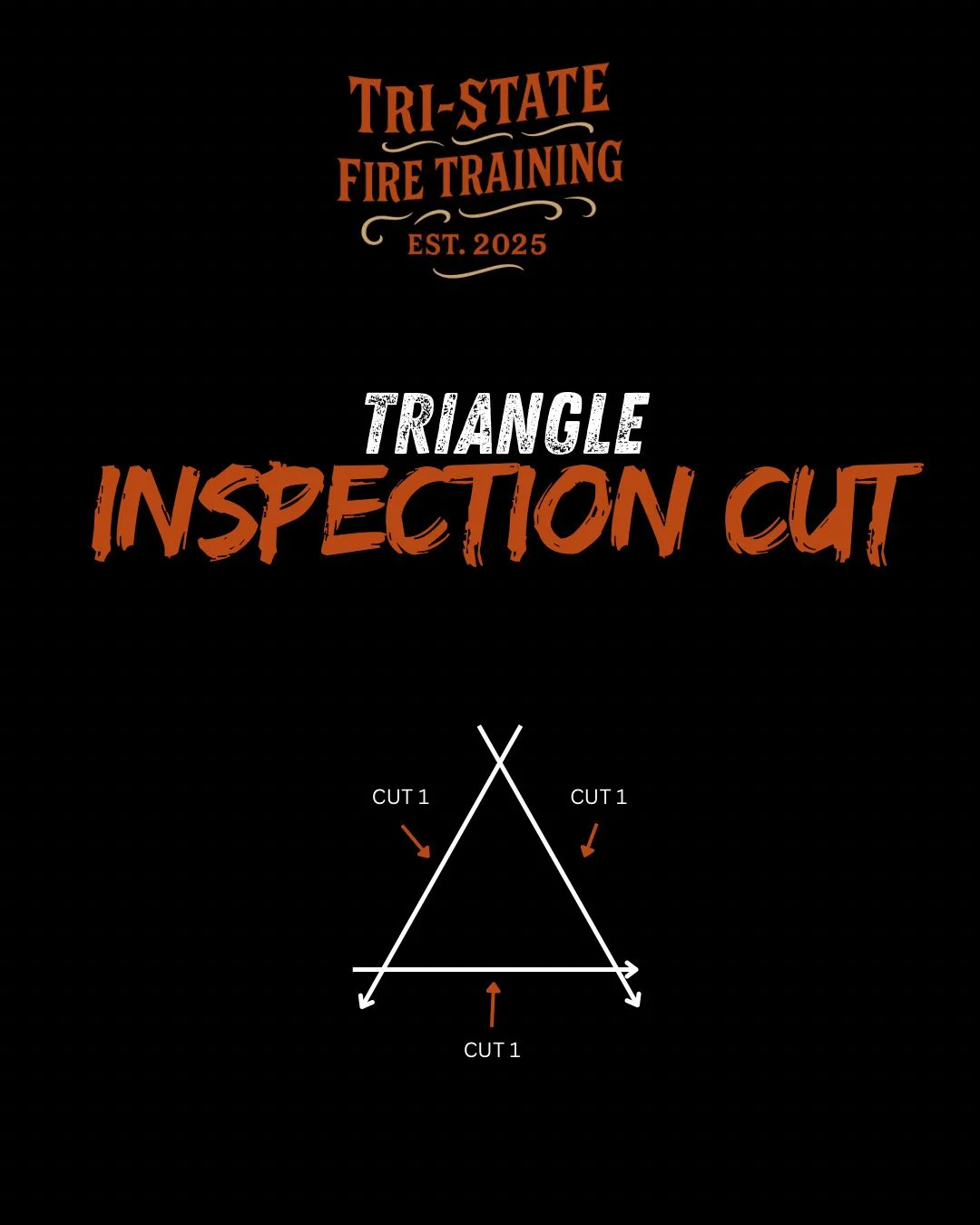
The triangle inspection cut is one of the quickest cuts a roof team can make and is primarily used to evaluate conditions beneath the roof surface before committing to a larger ventilation opening. This cut allows firefighters to observe smoke conditions, heat, and fire location while also identifying roof construction and the direction of structural members.
Steps:
• Make the first angled cut downward along one side of the triangle.
• Make the second angled cut so it meets the first cut at the top point.
• Complete the bottom cut connecting the two sides.
• Remove or push down the triangular section using a hook or pike pole.
• Observe smoke movement, heat conditions, and roof construction below.
This small opening provides valuable information about fire location and roof stability. It can confirm whether the crew is operating over the seat of the fire and help determine whether it is safe to continue with larger ventilation operations.
7-9-8 Coffin Cut
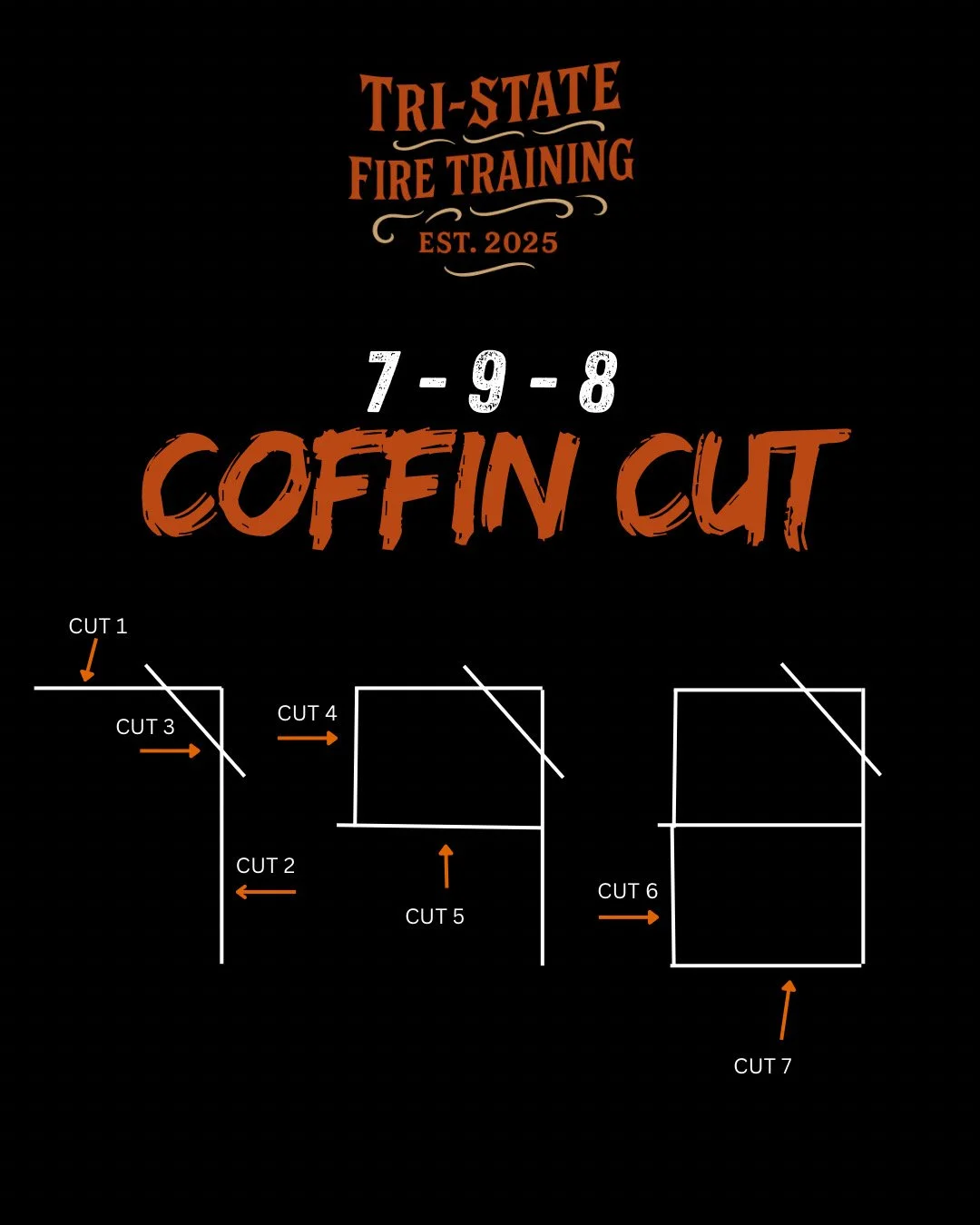
When a larger ventilation opening is needed, the coffin cut is commonly used on flat roofs. This technique creates a large rectangular opening that allows significant heat and smoke to escape. The name comes from the shape of the finished opening and the general sequence used while cutting.
Steps:
• Begin with a short horizontal cut to start outlining the ventilation area.
• Make a vertical cut downward along one side of the opening.
• Connect the top corner to ensure the decking separates cleanly.
• Continue the horizontal cut across the top of the opening.
• Make a center cut across the middle to divide the decking into manageable sections.
• Complete the opposite vertical cut to form the second side.
• Finish with the bottom cut to complete the opening.
• Use hooks or pike poles to push the sections of decking down.
The coffin cut creates a large exhaust opening directly above the fire area, allowing heat and smoke to vent rapidly. This can dramatically improve conditions for interior crews by reducing heat buildup and improving visibility.
Two Panel Louver Cut
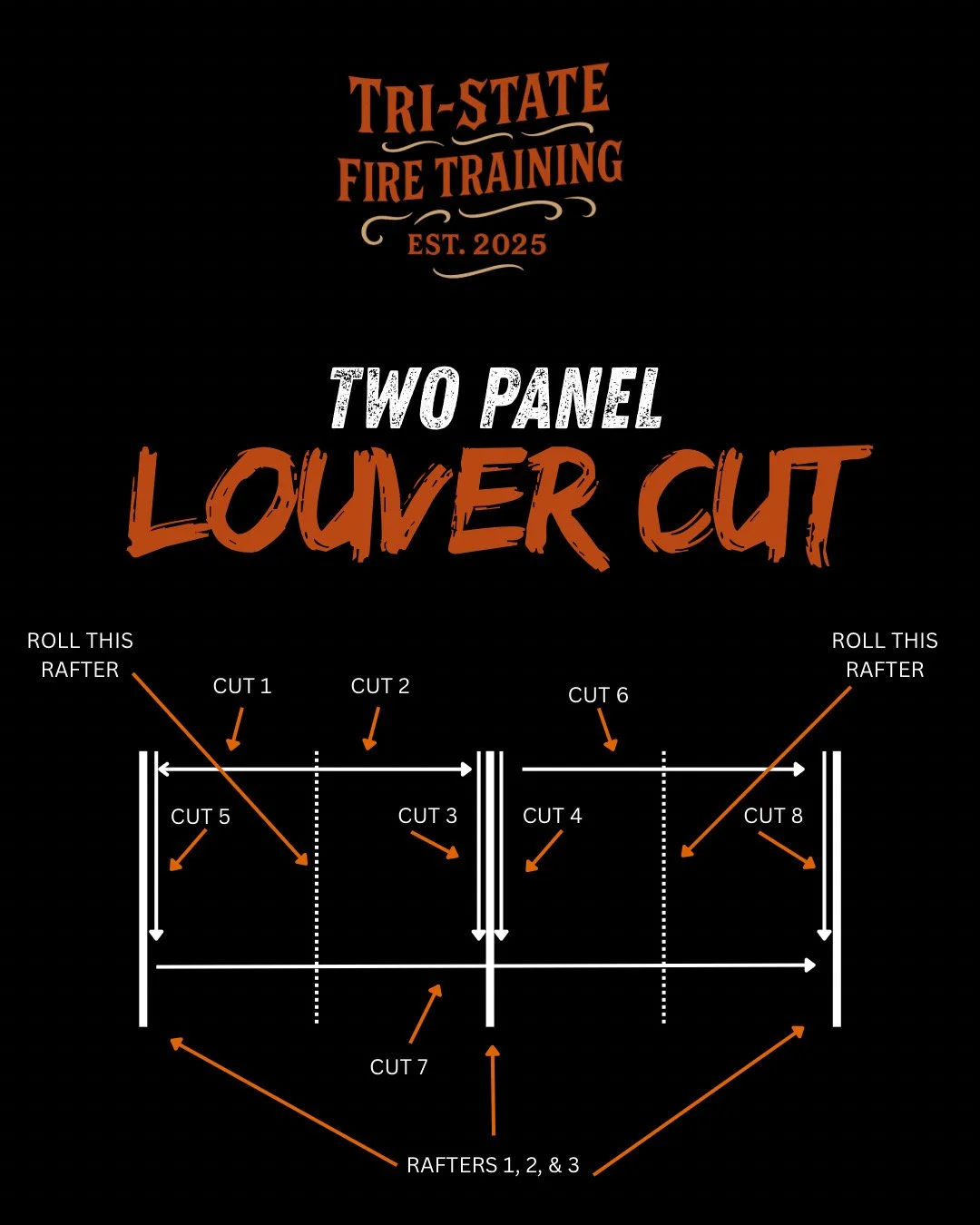
The two panel louver cut is another effective technique that allows firefighters to ventilate the roof while keeping sections of decking attached. Instead of removing the roof sections entirely, the panels are cut and rolled back over the rafters like louvers.
Steps:
• Establish a horizontal cut across the top of the intended ventilation opening.
• Make vertical cuts downward to outline the first panel.
• Add a relief cut to allow the decking to bend without binding.
• Extend the horizontal cut across the next section to begin the second panel.
• Complete the vertical cuts outlining the second panel.
• Use hooks to roll the panels back over the rafters.
The advantage of this method is that it creates a large ventilation opening quickly while keeping the roofing material attached to the structure. This reduces debris falling into the building and allows for efficient smoke and heat removal.
Safety Considerations
Roof ventilation places firefighters directly above the fire and on potentially compromised structural members, making safety a constant concern. Roof crews should continually sound the roof for stability, watch for soft spots or sagging decking, and identify the direction of rafters or joists to avoid cutting structural members. Multiple means of egress should always be established with properly placed ground ladders, and ventilation should be coordinated with interior attack crews to prevent worsening fire conditions. While vertical ventilation is a powerful tactic, it must always be performed with strong communication, situational awareness, and the understanding that roof conditions can deteriorate rapidly.
Until next time, work hard, stay safe & live inspired.