The Importance of Fire Behavior

It has been said time and time again, "You can never train too much for a job that can kill you." As we are aware, firefighting has many aspects to it. Many of these are common to every fire department, no matter their location, size, or status (career or volunteer). Other aspects are specialized areas that not all departments focus on or specialize in, such as medical, hazardous materials or technical rescue. In any case, having a sound basis in the area of “firematics” is a steppingstone to success for yourself and for your crew. We will briefly touch on key areas every firefighter should have a sound understanding and strong knowledge of. Many of these areas are touched on briefly in probationary/training school and then oftentimes, pushed aside once graduated. However, these areas are the core foundation for everything we do as firefighters and lay the groundwork for everything else we do on the fire ground. The skills of understanding these concepts, terminology and definitions is in fact, simple in theory. The difficult area is understanding the strategies and tactics behind them in order to implement those them. All good leaders and firefighters must understand these core areas of which everything else it built from. 

The areas I would like to briefly touch upon are building construction, fire behavior, reading smoke and size-up.

Building Construction

In the American Fire Service, there are five and oftentimes six different types of building construction however this may be different in various parts of the world based on the materials used to build structures. As firefighters, it is imperative that we know our enemy and know everything we can about it. Without having at least an understanding of our enemy, it becomes difficult to defeat it. In most every one of our cases, the enemy is the building structure. In order to be a successful firefighter in any capacity, on any apparatus, in any area, understanding and having a solid foundation of building construction knowledge is vital. Just as a world-class fighter study their opponent in the months leading up to a fight, us as firefighter MUST study our buildings in our areas, so we too are prepared to fight…and WIN. 

The most vital piece of information I can provide here is simple. It makes a difference in knowing the different type of structures and how to identify the differences however, what make it even more important is the ability to identify the types and how thewy will react under fire conditions while in the moment! This leads us to fire behavior. 

Fire Behavior

Fire behavior is the foundation on which all firefighter knowledge is built upon. Moreover it is our understanding of fire behavior from which we can gain an understanding of fire and how to suppress it properly. The lack of fire behavior knowledge creates an even greater risk for serious injury or death. Understanding fire behavior is truly being able to operate as a firefighter. The understanding of fire behavior is the basis for understanding fire suppression and the understanding how to properly perform other tactics such as ventilation, forcible entry on some occasions and overhaul.

As society changes or in many cases evolves, so does fire behavior. The reasoning behind this is simple - the introduction and presence of synthetic materials (also known as plastics). These materials in their solid form are petroleum- based products, therefore producing an increase in the output of thermal energy. This reasoning alone is a cause for a more rapidly spreading fire regardless of the type of structure it is in. More so than not, it is causing our enemy (the building) to have more fuel to hurt us. To understand fire behavior, it is important to understand the phases that come a long with it and it’sattributes – ignition, growth, full developed (flashover is present) and decay (back draft is likely). To understand these areas takes years of studying and training to become proficient but have the basic concepts down is a great start to proficiency in fire behavior for firefighters of all levels and experience.

With fire comes smoke. 

Reading Smoke 

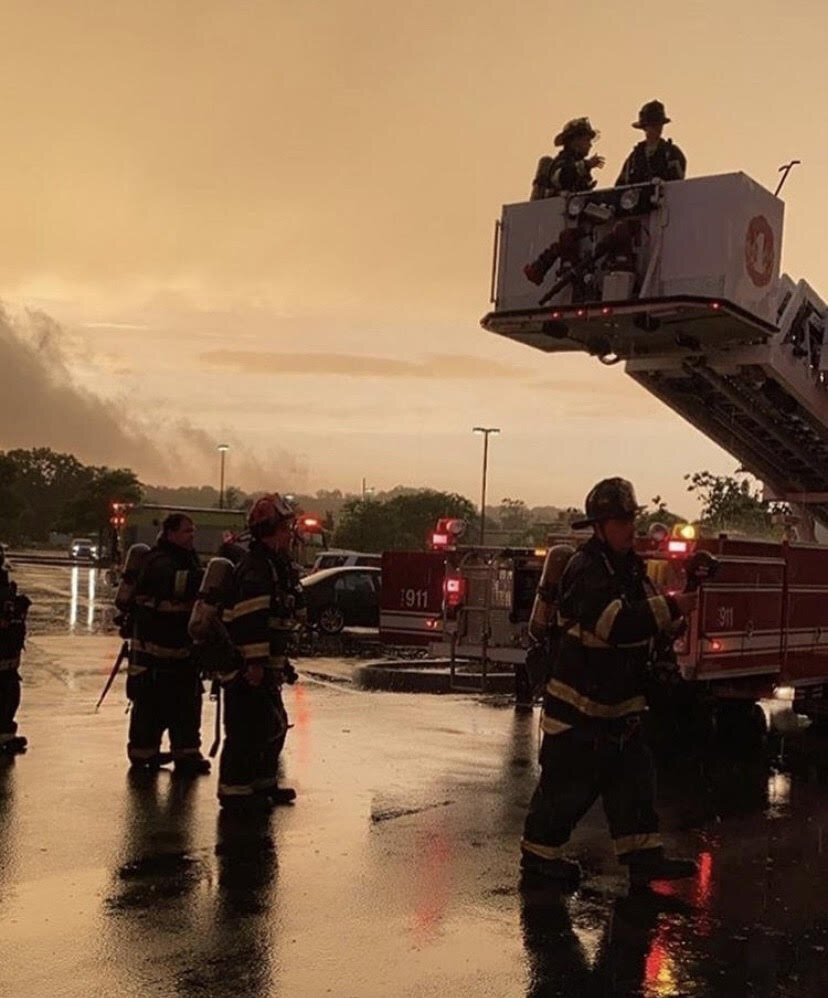
An important aspect on the fireground for many reasons is understanding smoke and smoke behavior. Many clues from the smoke alone can help identify the location and status of the fire. Command and company officers, as well as firefighters, need to be able to read and interpret all of the clues while conducting their size-up upon arrival and throughout the incident.  

Here are some clues to take into consideration: potential fuel, density, color, velocity, and volume

Smoke is fuel. In today's world and the modern-day fire service, the products of combustion are highly toxic, flammable and potentially explosive. The smoke’s chemical composition is different at each fire due to the different fuel sources yet, one thing remains the same; smoke contains high levels of carbon monoxide.

Density identifies the thickness of the smoke, it’s level of energy and if there is a potential for a flashover or for fire spread. 

Color tells you how flammable the smoke is and what is burning.

Velocity tells us how fast or slow the smoke is moving and by doing so helps determine the location and its flow path. 

Volume on the other hand doesn’t speak to firefighters about smoke or fire but it does give firefighters the amount of fuel that is burning. By knowing how much fuel is burning, provides insight to the size and intensity of the incident.

Understanding smoke provides the fundamentals for reading and identifying changes in fire and smoke conditions in the interior or exterior of a structure, along with identifying and possibly preventing flashover or fire spread. 

Size-Up

The size-up is for all intents and purposes, our game plan or battle plan, if you will, against the structure we are working at. The size-up is where firefighters and fire officers gather information in order to make safe, efficient, and effective fireground decisions. Fireground decision making, as we know, is meant to be quick, but with an emphasis on safety and ensuring the tactics are done efficiently and effectively. This is done in three phases; the pre-incident size-up, the on-scene size-up and the after action review. All three of these have their purposes.

Pre-incident size-up allows firefighters to gather as much information as we can about the structure and in contents inside and helps guide our on-scene strategies and tactics. 

On-scene size-up is where firefighters utilize our pre-incident size-up and put it to work. This size-up is where more information is provided specific to the incident and can now confirm our findings from the pre-incident size-up. Further, this is where company operations are assigned and take place.

 After-action-review is the final stage in the pre-planning process. This is the time for firefighters and officers to discuss and share the information obtained and to discuss the success and failures experienced at the incident. It is also a time to ask a few key questions. 

• What did we expect to happen?

• What actually occurred?

• What went well and why?

• What can we improve upon and how?

The benefit of asking these questions allow for strengths to be easily identifiable and make it easier to uncover areas of weakness. By uncovering areas of weakness, you can develop ways to improve them! 

In closing, I’d like to leave you with this piece of advice. If we think of firematics as an orchestra and each piece getting broken down into sections, we can identify each area as its own unique piece yet, an integral piece to the orchestra as a whole. With practice, each section sounds in harmony and sync with one another, but without practice or even a section missing, the harmony and synchronization doesn’t happen. This is the same for firematics, you cannot have one without the others.

For further information on these topics, you can refer to my book, “The 5-Tool Firefighter” where these concepts are laid out in greater detail along with other areas of interest to guide all firefighters on their journey to success.

Until next time; work hard, stay safe and live inspired.


Benefits of Stretching

Unlike athletes firefighters and other first responders don't know when "game time" will be. It could be at 7am or it could be at 11pm but in any case we need to ensure we are at our best when the alarm goes off. As we know, we cannot predict when runs will come in and when they won't but preparation of our bodies before and during shift is just as equally as important as preparing our gear, tools and apparatus. Further, being able to wind down after runs is just as important as preparing for the shift and the potential call volume. This will help prepare the mind and body for work.

So where am I going with this?

I'm going with a focus on stretching. That's right. Stretching.

Stretching, even a short routine, added to your daily routine is a great benefit for overall health and wellness and pays off large dividends. It could be used as a pre-workout or a post-workout routine or both. Stretching can help unwind and release tension after a hectic day or even a long duration run as well as assist in increasing energy levels.

Here are some health benefits to stretching that help can keep you on the path for a long shift in the firehouse and overall better health.

1. Improves flexibility and agility which is important for all firefighters
2. Helps keep a decreased resting heart rate. A health heart is vital for all firefighters
3. Increases the circulation of blood and oxygen to the muscles
4. Helps remove waste from tissues such as lactic acid which is built up during intense exercise. Sometimes causing painful, sore muscles.
5. Helps prevent injuries
6. Increases overall mood and well-being.

Stretching at its best could be used a form of exercise for the body and mind. Keep in mind to only stretch as far as your current level of flexibility and over time the range of motion will gradually increase.

6 Stretches to do everyday to help improve flexibility, blood circulating, oxygen levels, relieve stress and tension. Do all 6, three times for 15-30 seconds each.

  1. Quadricep stretch

  2. Hamstring stretch

  3. Calf raise

  4. Spinal twist

  5. Kneeling hip-flexor

  6. Chest opener

Always remember, before beginning any type of exercise program to consult with your primary physician first.

Side note: As per the 2018 NFPA Journal on firefighter injuries, there was an estimated 58K plus injuries estimated in 2018 and also the lowest since the NFPA has been analyzing this data in 1981. In this report it was noted that the major type of injury during fire ground operations were strains and sprains, which accounted for 38% of all injuries while it accounted for 59% of all non-fire ground injuries.

Until next time; work hard, stay safe & live inspired.


Here’s To 2021 & Lets Go 2022!

From all of us here at The Firehouse Tribune, we would like to wish you all a very healthy and happy new year.

Thank you for all of your support and we will continue to keep the love and passion of fire service going! 

As we look back on 2021 and venture into 2022, we had many great memories of the year. We started off by welcoming our newest contributor Assistant Chief Tom Marchiano to the team and followed up with guest opportunities with a few podcasts - FIRExTalk & The 5-Alarm Task Force.


Earlier this year, we took part in a fundraising webinar hosted by The 5-Alarm Task Force and Insight Training discussing the many roles on the fire ground and how they play a role in a MAYDAY incident. This brought us connections throughout the fire service and opened us up to where we are today. 

We’ve reached the continent of Africa and worked with the Africa Fire Mission in training firefighters all across the continent of Africa from various countries on many aspects of the job. We hope to continue our work with them in the future and hopefully branch out to other parts of the world as well. 

Late this year, we released our live webinar series “The Firehouse Tribune Kitchen Table Web Series” and launched our first episode with Lt. Nick Baskerville discussing mentorship in the fire service. 

Our second episode will be Tuesday January 25, 2022 at 7p with Asst. Chief Tom Marchiano who will be discussing “Six Tips to Guide New Fire Officers”. To register click the link below. This is 100% FREE to register and participate! Registration is limited to 100 participants. 

Our founder Nick Higgins ended this year by releasing his first book “The 5-Tool Firefighter”. Available both on Amazon and the Firehouse Tribune

Looking forward to a blessed and healthy 2022 and let us not forget those that did not make it to 2022. May we always remember and honor these individuals through our commitment to the job and continuing to stay on the path of success, humility and leaving this gift we have each day better than we found it. 

Here’s to all of you and your families and here’s a toast saying goodbye to 2021 and let’s get it on 2022! Cheers! 🥃

Until next time; work hard, stay safe & live inspired.

Solar Panels: A New Addition to Today’s Fire Service Enemy

In a 24 hour period the sun produces enough energy to supply our planet for over four years. That’s 1,460 days of solar energy the planet received in just 24 hours. Solar energy is everywhere and the advancements in it are growing and for many reasons. It's renewable, pollution free and cuts costs of other energy sources. What's this mean for firefighters? Well it means a lot. Solar panels are popping up all over buildings and on plots of land like never before. We're noticing this by a simple placard found on the commercial structures that are now using solar energy with the letters "PV" on it. 

 “PV" which stands for photovoltaic is the method of converting solar energy into direct current electricity (DC) using semiconducting materials that exhibit the "photovoltaic effect". The "P" which stands for photo (light) and the "V" which stands for voltaic (electricity), this of which it bears its name. The PV effect is the creation of voltage or electric current in a material when exposed to light. 

In today's society, solar panels are everywhere just like truss construction is everywhere. Thus creating a need for firefighters to be aware of the dangers and understand how to attack fires with PV systems. 

For firefighters to be safe and operate efficiently on the fireground, there are a few critical steps we must take to ensure the solar panels are accounted for and in check. Do not begin fire suppression until these first 2 steps have been completed.

  • 360 Size-up: This is a no-brainer. By performing a 360 size-up upon arrival, firefighters are able to possibly locate the panels or the energy storage system (ESS) if the panels are on the roof or an area without access to at the time. Most of the time depending on jurisdictional building codes, the ESS panels are located on the exterior of the structure normally near the utilities, the garage or the basement, should the structure have one.

  • Treat this as an electrical fire and turn off the systems starting with the utility grid. The main breaker box will activate the backup battery and run the risk of electrical shock to interior firefighters in the structure. If the battery is located in a confined space in the structure and exposed to heat above 150 degrees Fahrenheit, it is imperative that ventilation of that space begins.

Once the size-up has taken place with the panels and/or ESS located along with fire suppression taking place, ventilations needs to begin. However, firefighters and command need to understand that if the panels are located on the roof and are burning, there is a potential for collapse based on the volume of fire around the panels and on the roof. 

 When performing ventilation, especially vertical ventilation, firefighters must recognize that electricity is being produced by the panels 24 hours a day. 

  • Once these steps have taken place, fire suppression can now continue. As a safety precaution, firefighters should try and extinguish the fire at a minimum of 20 feet away when using a straight stream or a minimum of 5 feet when using a fog pattern.

  • After the fire has been knocked, overhaul can begin - carefully.

Panel safety

Firefighters should be careful not to touch any of the panels in case of any damage done to them during the fire. Instead, firefighters should cover the panels with canvas tarps, especially at night due to no sunlight exposure to them. The reason panels should be covered during night operations is due to the wires running through the conduit to the charge controller or inverter which continues providing the panels power. 

Battery safety

If the battery was the source of the fire, continual water flow to the extinguished battery is important to keep the battery cool and from the possibility of obtaining a chemical reaction causing a thermal runaway. Should a thermal runaway occur, the temperature inside the battery will reach the point that causes a chemical reaction inside the battery. This reaction produces more heat and drives the temperature of the battery higher, causing further chemical reactions and more heat. In thermal runaway, the battery cell temperature will rise in milliseconds and release suddenly. The chain reaction will reach temperatures of around 752 degrees Fahrenheit and produce gassing of the battery along with fire. 

Burns tests have shown that lithium-ion batteries can produce these chemical reactions 72 hours after extinguishment. 

 As technology changes, firefighters need to be educated and trained on all of the new advancements in the market today. By doing so, firefighters can continue to develop a proactive approach to new technology when responding to incidents. Solar panels may not be completely new to us but the growth of them in residential and commercial structures has rapidly increased over the years. Today, it is nearly impossible to not catch a glimpse of solar panels on almost every street across the country. Stay diligent to the advancements in the world and continue to keep training and getting after it.

 Until next time; work hard, stay safe & live inspired.


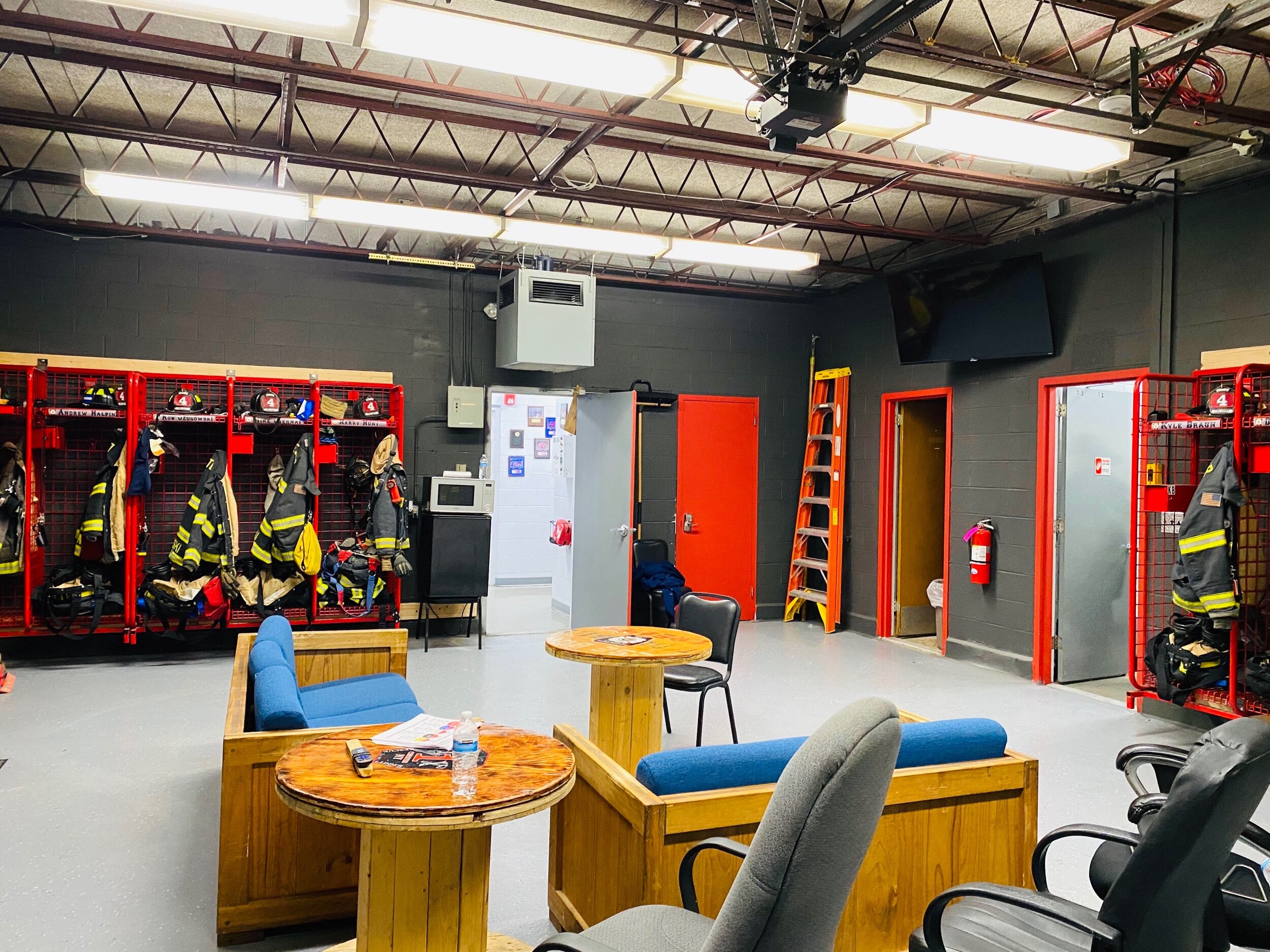
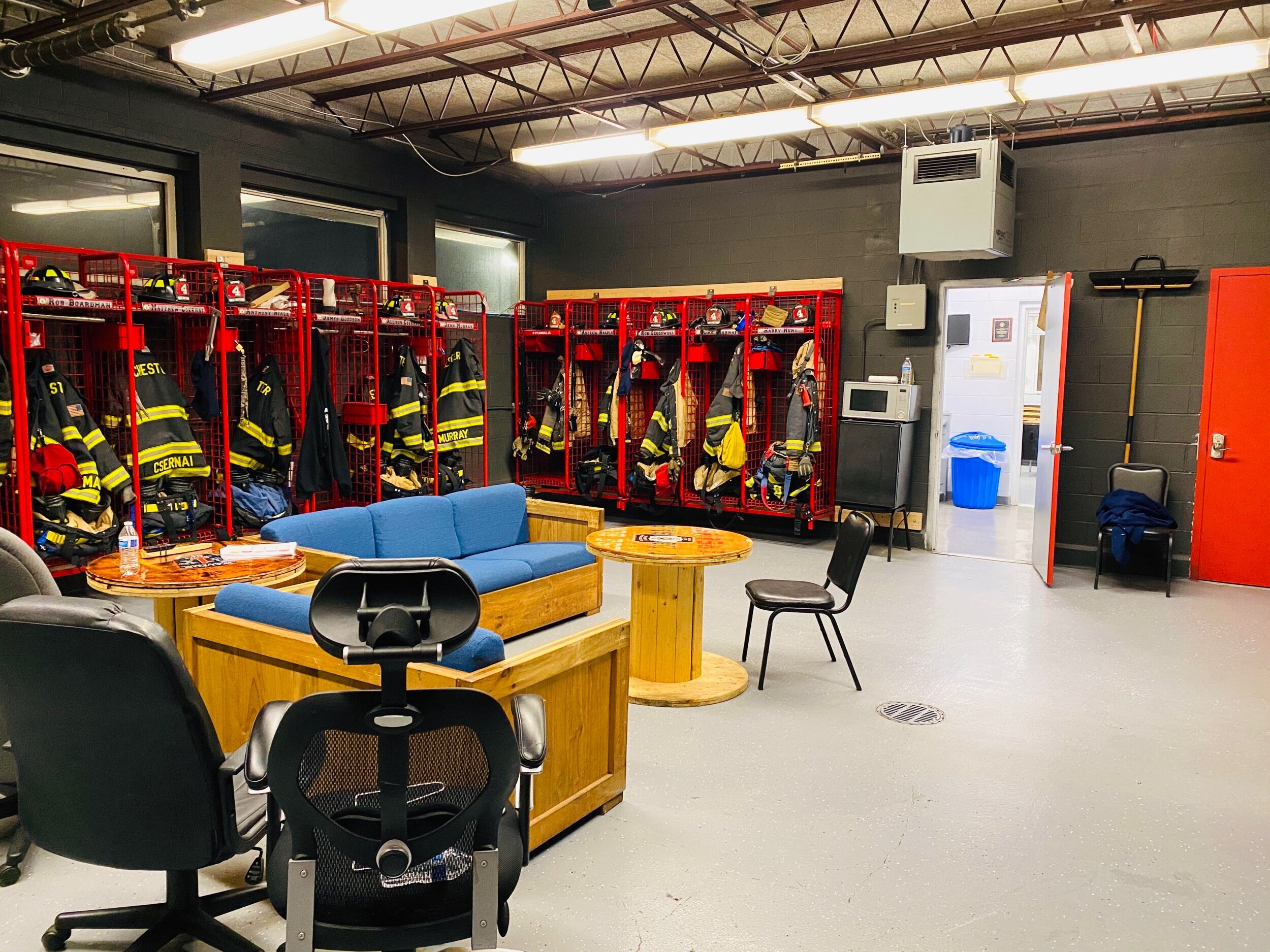
Firehouse Pride is More Than a Phrase. It’s a Way of Life.

According to Websters Dictionary, pride is defined as “the quality or state of being proud”. This term pride has been thrown around a lot in the fire service and in firehouses and for good reasons.

Since I joined the fire service many years ago, it was ingrained in me to mop the floors when dirty, take out the trash when the can was full and ensure the kitchen, living quarters and bathrooms were spotless.

We make sure our apparatus, our PPE and tools are kept in working order so when the bell rings, we’re ready to go. We train as hard and as often as we can, so when we arrive on scene we can perform like championship athletes ready to go on the big stage under the lights. When we meet the public, we make sure our uniforms are squared away and we look like a unified well oiled machine in hopes of making an impression on the children who want to emulate us one day.

Why do we do all of this? I’ll tell you. For the love of the job. For those we answer the call with each and every day. For these men and women are no longer strangers from all walks of life but forever family. For the service to the residents of the community. For those who laid the ground work before us to make this firehouse more than a house because in the end, this place isn’t a house it’s a home. In the end, this is pride. This is firehouse pride.

Until next time; work hard, stay safe & live inspired.

Do We Just Say the Words or Do We Live By Them?

The fire service means a lot of different things to different people. There are the “adrenaline junkies,” who love to hear the bells hit, the sirens scream and the lights start flashing. There are the “probies,” new to the job or department, who are excited to be a part of the fire service, but as of yet, do not have a great deal of knowledge. Then there are  those with their five-to-ten-year-careers, who are used to the calls and the firehouse routines. And finally, there are the veterans, with anywhere from ten-to-thirty years of service. Yet no matter which of these levels you find  yourself, there is one word that is used around the firehouse, probably only second to, “food,” and that word is “family.”

No matter the type of department you belong to, career, volunteer, part-pay or WUI, no doubt that you have not only heard the word, “family” used many times in the firehouse, but you have used it yourself. In some ways, the word holds true; some of us spend almost every shift as 24-on/48-off. Others spend a volunteer shift a couple of times a week. And some, camp in the wilderness, just to grab a bite to eat and a couple of hours of sleep, before fighting the wildland “red devil” early the next morning…again. 

All of this makes for a great amount of time being spent together. We train, we learn, we eat, relax, and often sleep (or try to) together. Almost sounds like a real family. And of course, related words often used are “brother” and “sister.” Moreover, we refer to other firefighters, even those we have never met, as “family.” 

The question is, in our hearts, on an everyday basis, do we see our own fellow firefighters, truly as family or only when we believe they have risen to an artificial level that we have pre-set within our own judgmental minds? There is an old idiom in the fire service; the two things that firefighters detest most are change and status quo. Thus, a new probie, a rookie, a new volunteer or a WUI, often are forced to prove him/herself, before be accepted by the existing members. Yet did not each and every one of us, take almost the same oath, “To protect lives and property?”

Nevertheless, many of these fresh, new members and even temporary transfers are welcomed to the station or crew as “ghosts;” treated either as non-existent or as outsiders until they prove themselves. And ask yourself this, “Who do they have to prove themselves to?” You? Because you have eighteen months on the job? Or you, because you do not believe that a women is capable of being a terrific firefighter? Or you, because you are the senior member of the “house” and every rookie must “prove” themselves to you?

Let us re-visit the word, family. If you have an older sibling, did your parents ask that sibling if he/she would “allow” them to bring another child into the family? If you are an older sibling, did your parents ask your permission to have another child? Get my point?

While we will all agree that every able-bodied, man or woman will need to learn a great deal, above and beyond what was learned in rookie school, in his/her newly assigned station, department, etc., I posit that this additional knowledge should have nothing to do with whether they are considered family or not. If they took the oath and received their badge, they are indeed, family. 

Unfortunately, far too many firefighters, of every rank, all too often want to test the rookies, not about true fire duties, responsibilities and/or tactics, but by denigrating them, forcing them to perform all the menial tasks of a firehouse, over and over again; perhaps to the point where he/she might resign. And when they do, those in that firehouse continue to besmirch them, with negative comments, e.g., “He couldn’t even wash the floor,” “She always complained when we made her do ‘toilet duty,” etc. 

Is this how we treat “family.” When your uncle from Europe, whom you have only heard about and never met, finally comes to the U.S. to visit, will you treat him like the stranger and foreigner he is to you? Or will you welcome him and sit with him to learn about his life in his country? Or will you order him to clean the 2-1/2 bathrooms in your home and take out all the garbage and recycling, twice a week?

When I used to travel overnight for my former profession, I would always find some time to make my way and visit a local firehouse. I would knock on the door, ring the bell, or walk up to an open bay door. I would show them my ID and badge. And from that moment on, in over fifty visits, I was always treated a “brother” firefighter. Often times, I would even be able to run a call with them. However, while I would always offer to buy-in to a firehouse meal, I was never required to clean the bays, toilets, kitchen, etc., to “qualify” as a member of the fire service family. Moreover, I would always volunteer to help with meals, even offered and cooked a few, help clean-up after the meal, even helped clean a rig that returned after a call. 

Why? For me, the answer was simple. Before I joined my first combo department as a volunteer, I was a young man from suburban Boston, who lived a comfortable middle-class life and had worked, one way or another, since age twelve. I had not even planned on being a firefighter. 

In this combo department, I was welcomed with open arms. A bit strange back then (in the mid-1970’s), as, a young eighteen-year-old man I met the night of our vote, (and who is still my best friend today) were the first two people of the Jewish faith to ever apply for membership. And for some of the members, we were the first Jewish people that had ever met! Nevertheless, we were welcomed warmly, accepted by all, and immediately included in all of the station life. I did not have to prove myself for other firefighters to shake my hand. Many that night, asked if I had experience and offered assistance any time I wanted to learn something. 

Sure, I attended as many drills as my full-time job allowed and, if I did miss a drill, I would always pair up with whoever the caretaker was on the following Saturday or Sunday and learn what I missed. There was one of the caretakers, who wanted to mentor my new friend and I and told us so. He saw our eagerness to learn and he wanted to be sure we learned correctly, so that we would be an asset to any crew on an apparatus, responding to a call. 

More than a mentor, the three of us soon became fast friends, as did our families. As a matter of fact, it truly was the fire department’s Women’s Auxiliary that truly brought the word, “family” to have strong meaning in our department. Frequently, family celebrations were held at the firehouse and every paid and volunteer family was invited. 

Nice scene, correct? Now ask yourself, do you have that same family atmosphere with your crew, station and/or department? Does your department have this “atmosphere?” Does a new arrival receive a warm greeting from all on his/her first day? Or do you maintain a fraternity/sorority mindset that the “newbie” has to prove his/her worth?

And this has nothing to do with training new recruits. Every firefighter-recruit must go through proper and ongoing training, as should every firefighter! However, training should have no bearing on how the new recruit or even a transfer firefighter is treated. 

Today, in 2021, we are all too aware of the told that the stress, the trauma, the tragedies we have seen, all take a toll on our behavioral health, whether you are willing to admit or not! For most fire-rescue personnel, you cannot and probably will not go through your career without being exposed to some of the worst of life, trauma, tragedy, death, dismemberment, etc. Yet, many firefighters believe they are obligated to stifle those emotions. Now, years later, we see both the physical and mental toll of trying to hide the horror.

Juxtapose that with our treatment of our fellow firefighters, be they rookies, or those with less than five or so years under their belts. Would you condone the abuse of probies, just because they are new to the culture, as you would condone the abuse of your child attending a new school for the first day? And please, do not insult me or yourself by justifying such abuse as, “…just kidding around!”

If a firefighter who lives three-thousand miles away from you, needs financial assistance, how would you know about it? And if you did, what would you do about it? On the other hand, if one of your own brothers or sisters, who lived those same three thousand miles away, needed help, what would you do? 

If your answer is, “Well, he’s my real brother and he needs my help!” then you really do not understand or cannot comprehend what this word, “family” means to the fire service. Why was the term even used in the fire service?

In its earliest days, from the bucket-brigades to Ben Franklin’s first volunteer fire department and beyond, the word “family” was used because sons often followed their fathers’ examples. If the father was on the bucket brigade or a volunteer firefighter, the oldest son did the same, when he came of age. And the next one and one after that. Thus, that group or department had a true family tradition connected to it. As we progressed into the nineteenth and twentieth centuries and the number of both volunteer and career departments grew, we saw similar traditions. Multiple members of the same family, working for or with the same department as other family members, brought out the concept of the firefighting family. And while we can probably be assured that there was often, good-hearted joking around, the sense of family was never lost. 

What about today? Who are you? How do you welcome and approach new recruits? How do you interact with them? Are we so overconfident that we truly believe we have a “right” to cajole, tease and punish a new recruit? “They deserve it,” I have seen on a social media post. 

If we are going to use the word “family” for those who willingly face the dangers and scenes that we would not want anyone else to see, then we damn well better live a “family” life, both inside and outside the fire service.

About the Author

Steven S. Greene, is a former volunteer firefighter/EMT, having served four years in Guilford County NC and four year in Onondaga County NY, before a previous injury ended his career. 

In 2016, Steve created the podcast, “5-Alarm Task Force.” With listeners in nearly 40 countries, his guest list includes the late Chief Alan Brunacini, Chief Dennis Rubin, Chief Bobby Halton, Chief Tim Sendelbach, Peter Matthews, Commissioner Adam Thiel, and many others. The podcast/webcast is now in its sixth season.

20 Years Remembered

Twenty years ago our lives changed forever. In minutes, millions of American’s and others around the world witnessed the horrific attacks on the World Trade Center Towers in Lower Manhattan, the attack on the Pentagon in Virginia and the crash of United Flight 93 in PA.

At 08:46AM to 10:28AM, the world witnessed tragedy, sadness, fear and angry. The one thing we never lost was hope. As families of thousands would never be the same again from those losing mothers, fathers, son & daughters to wives, husbands, brothers & sisters, we never lost hope. Hope gave us a sense of comfort that we can get through this better and stronger than before. Hope that would unite us and bring us together like never before. Hard to think this all happened 2 decades ago. On a day as similar as today. Blue skies with cool temperature in the NY/NJ area indicating fall is right around the corner.

A lot has happened over these last 20 years, good and bad but one thing remained…hope. Our hope for today is different. Our hope today is to pray we never lose sight of those who perished on that fateful morning and those affected in the days, months and years after. Our hope is we keep honoring and remembering these men and women from all walks of life, race, religion and creed by continuing to keep their memories alive for generations years to come.

As first responders, it is our duty to honor and remember the firefighters, police, EMTs, paramedics and all those men & women who sacrificed their lives that day and those that lost their lives thereafter. Honor these men and women through actions not solely our words. Words come and go but action adds meaning. Honor them through dedication to our job. Continue to train hard, treat each other with respect and never lose sight of why we do what we do each and every time the bell goes off and each and every time we put on the uniform and walk out that door.

When we answer the alarm, we do it for those who came before us and for those who will be following in our footsteps.

On this 20th anniversary of September 11th, remember why you do what you do and dedicate ways to make yourself better than yesterday. If not for anything else but do it for those who gave their lives for it.

Until next time; work hard, stay safe & live inspired.